 Image 1 of 3
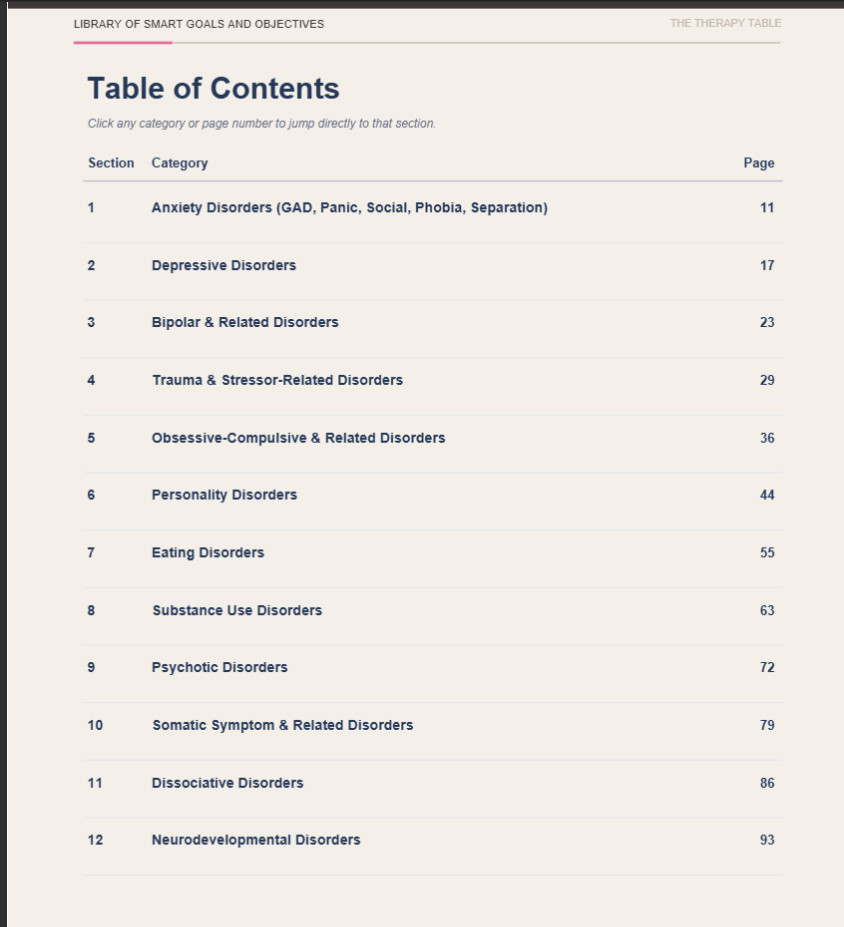 Image 2 of 3
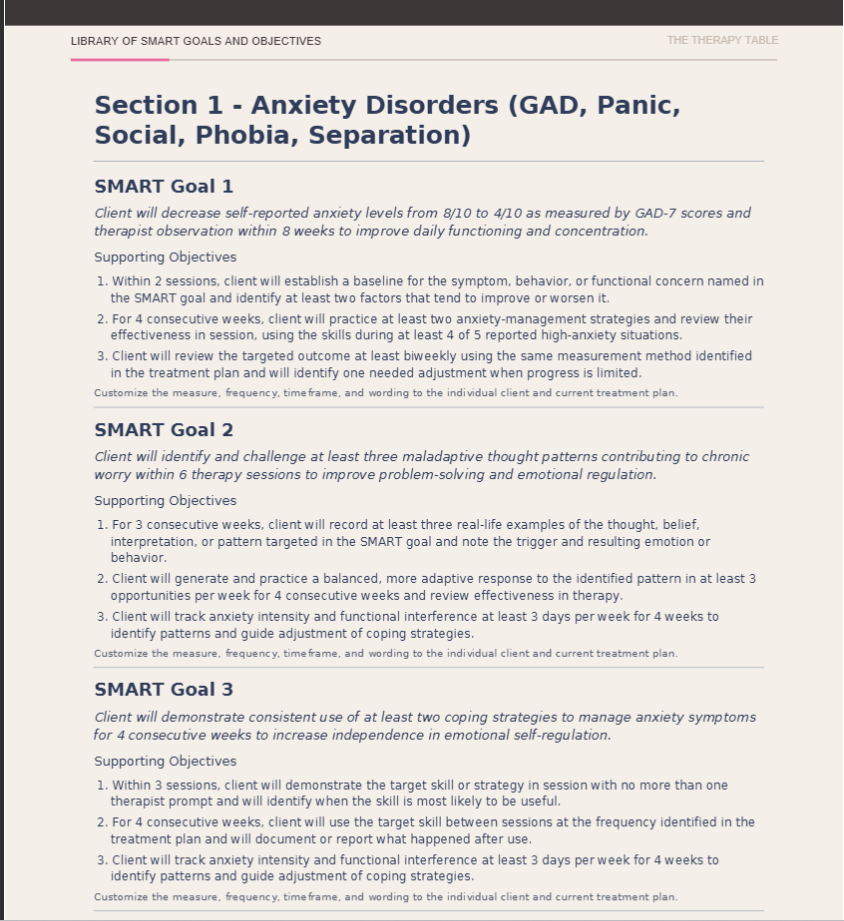 Image 3 of 3
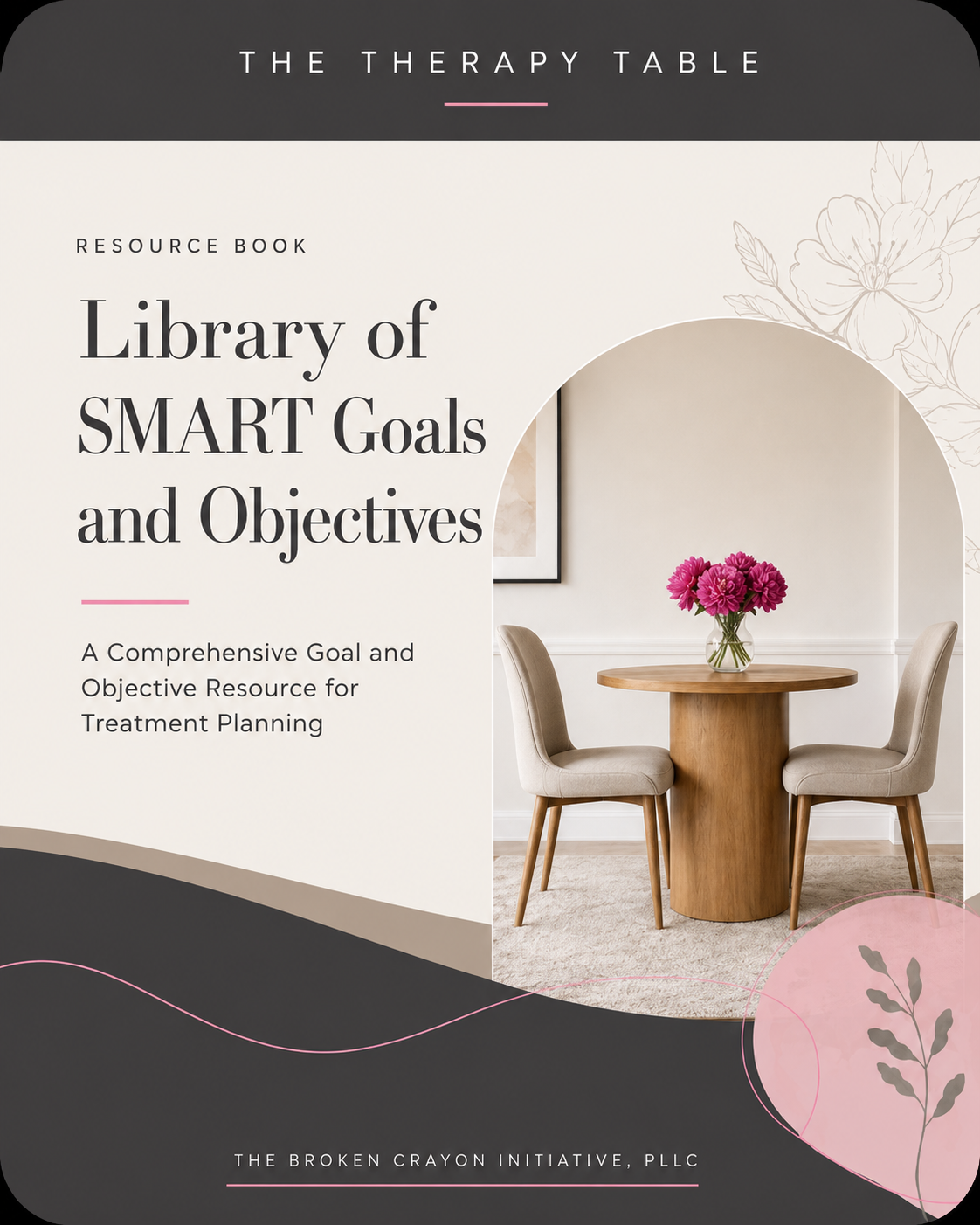
This extensive library with 57 clinical sections and 423 pages brings together SMART treatment goals and supporting objectives for each goal, giving clinicians a starting point for moving from a broad treatment outcome to smaller, measurable steps that can be monitored throughout care.
Rather than relying on vague objectives such as “client will improve coping skills,” this resource helps clinicians think more specifically about what the client will learn, practice, demonstrate, apply, or maintain as treatment progresses.
You’ll find treatment-planning support for areas such as:
anxiety, panic, phobias, OCD, trauma, depression, and bipolar disorders
ADHD, autism, personality-related concerns, substance use, eating disorders, and sleep
grief, chronic illness, chronic pain, caregiver stress, medical trauma, and end-of-life concerns
relationships, boundaries, communication, attachment, identity, self-esteem, anger, and emotional regulation
school concerns, parenting, foster care/adoption, LGBTQ+ concerns, homelessness, domestic violence, sexual assault recovery, and more
specialized concerns including postpartum mental health, workplace burnout, social media use, climate anxiety, and life transitions
Each section is designed to help clinicians quickly locate relevant examples and then adapt the language to the individual client rather than copy a one-size-fits-all treatment plan.
**Please note: This is a downloadable interactive PDF product
This extensive library with 57 clinical sections and 423 pages brings together SMART treatment goals and supporting objectives for each goal, giving clinicians a starting point for moving from a broad treatment outcome to smaller, measurable steps that can be monitored throughout care.
Rather than relying on vague objectives such as “client will improve coping skills,” this resource helps clinicians think more specifically about what the client will learn, practice, demonstrate, apply, or maintain as treatment progresses.
You’ll find treatment-planning support for areas such as:
anxiety, panic, phobias, OCD, trauma, depression, and bipolar disorders
ADHD, autism, personality-related concerns, substance use, eating disorders, and sleep
grief, chronic illness, chronic pain, caregiver stress, medical trauma, and end-of-life concerns
relationships, boundaries, communication, attachment, identity, self-esteem, anger, and emotional regulation
school concerns, parenting, foster care/adoption, LGBTQ+ concerns, homelessness, domestic violence, sexual assault recovery, and more
specialized concerns including postpartum mental health, workplace burnout, social media use, climate anxiety, and life transitions
Each section is designed to help clinicians quickly locate relevant examples and then adapt the language to the individual client rather than copy a one-size-fits-all treatment plan.
**Please note: This is a downloadable interactive PDF product